The lights on the runway at LaGuardia Airport were still cutting through the night just before midnight when everything went wrong. In a matter of seconds, a routine operation turned into a deadly collision that claimed the life of 30-year-old first officer Antoine Forest and left dozens injured, shaking the aviation community on both sides of the border.
Forest, a young pilot from Coteau-du-Lac, Quebec, had been building his career with steady determination. He was flying a Bombardier CRJ-900 operated as Air Canada Flight AC8646 when the aircraft slammed into a Port Authority fire truck crossing the runway. The impact was devastating. The aircraft’s nose section was torn away, and the force of the crash left little chance for those in the cockpit.

He had joined Jazz Aviation in December 2022 as a first officer and was known among colleagues as focused and driven. Before that, he trained at Cégep de Chicoutimi and gained experience flying for smaller regional operators like Air Saguenay and Exact Air. Those who knew him say he was living his dream, one flight at a time, until it was cut short in an instant.
The captain of the flight also lost their life in the crash, though authorities have not yet publicly released their identity. Together, they were responsible for the safety of 72 passengers and a small crew on board that night. In the end, it became a tragedy that extended far beyond the cockpit.
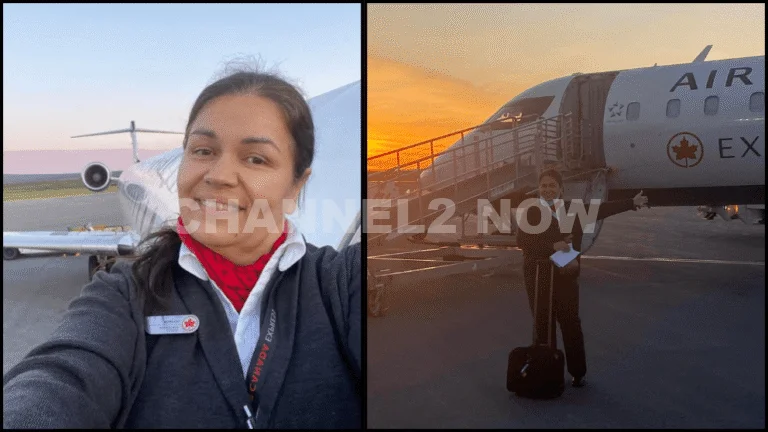
One of the most talked-about survivors is veteran flight attendant Solange Tremblay. She had been seated in the forward jumpseat when the collision happened. The force of the impact caused a catastrophic structural failure, ejecting her from the aircraft while she remained strapped into her seat. It is the kind of survival story that sounds almost impossible.
Tremblay suffered a broken leg that required surgery but avoided life-threatening injuries. According to her daughter, Sarah Lépine, the outcome could have been far worse. Family members have described her survival as nothing short of a miracle, especially given the violent nature of the crash.
Investigators say the collision happened after an air traffic controller cleared a fire truck to cross an active runway to respond to another aircraft dealing with an onboard issue. Moments later, the controller realized the danger and urgently tried to stop the vehicle. Audio recordings reveal the rising tension, with repeated instructions to halt, but the warning came too late.
Surveillance footage later showed the aircraft moving at high speed before striking the truck. Aviation experts say the situation could have been even more catastrophic if the aircraft’s fuel tanks had been hit. In the aftermath, emergency teams rushed in as confusion and shock spread across the airfield, while nearby pilots listened in disbelief over radio communications.
Out of the 76 people on board, 41 were taken to hospitals, though most have since been treated and released. Some injuries were also reported among those in the fire truck. As federal investigators continue to piece together what happened, the focus remains on runway safety procedures, communication breakdowns, and how multiple emergencies were handled at once.
For many, the name Antoine Forest now stands as a reminder of how quickly life can change in aviation. A routine night flight turned into a moment of loss that will not be forgotten anytime soon.

